Why Stability Matters for Hypermobility
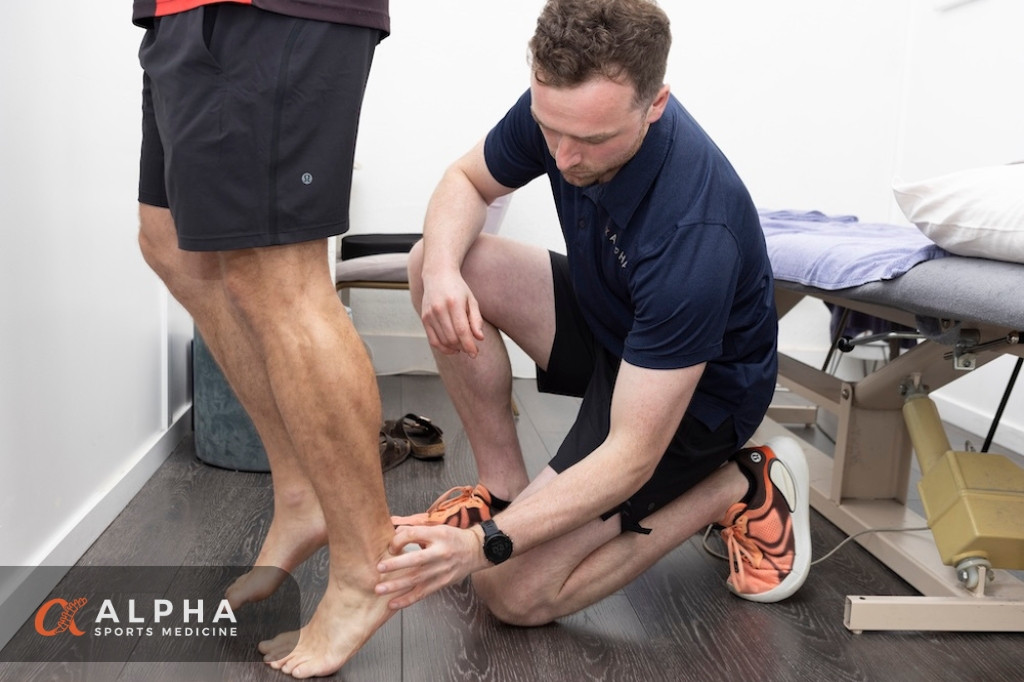
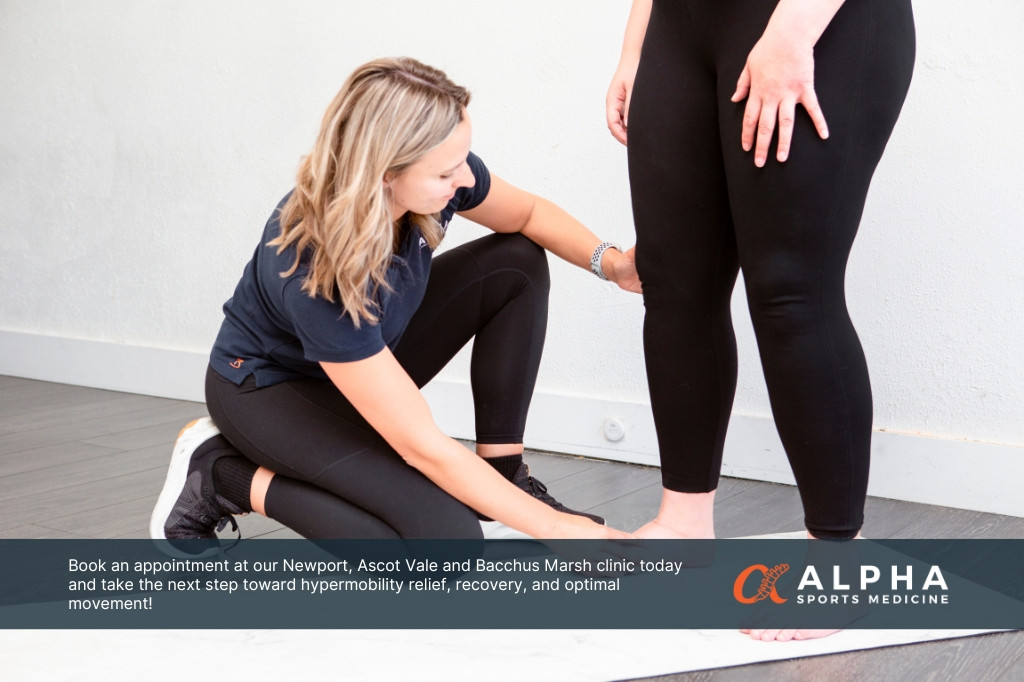
Running with hypermobile joints can feel unpredictable, especially when every step places additional demand on movement control. People living with hypermobility often notice reduced joint stability, a higher likelihood of discomfort, and challenges maintaining efficient form while running. ALPHA Sports Medicine aims to support runners by providing stability-focused plans that help strengthen movement patterns and build confidence on the track or trail. Through physiotherapy Bacchus Marsh, our team offers individual assessments, guided exercise programs, and ongoing support designed to help hypermobile runners understand their bodies and improve resilience. With the right approach, running can feel safer, steadier, and more enjoyable for people with hypermobility.
Running is one of the most natural ways to move, but for people with Ehlers-Danlos Syndrome (EDS) or Hypermobility Spectrum Disorder (HSD), it can feel like a daunting goal. At Alpha Sports Medicine, we believe that with the right knowledge, support, and strength, hypermobility doesn’t have to hold you back from running.
Understanding EDS and HSD
Ehlers-Danlos Syndromes (EDS) and Hypermobility Spectrum Disorder (HSD) are a group of connective tissue conditions that affect the strength and elasticity of the protein that gives structure to your joints, ligaments, and skin.
When collagen is more elastic than usual, joints can move beyond their typical range of motion. This increased mobility can lead to:
- Joint instability or frequent sprains
- Muscle fatigue
- Pain after activity
- Delayed recovery or recurring injuries
There are 14 subtypes of EDS; 13 have genetic markers and are considered extremely rare. Hypermobile EDS (hEDS) is the most common of these subtypes and does not have a genetic marker. Diagnosis of hEDS and HSD is a clinical diagnosis based on meeting the set criteria.
For runners, this can make movement control and stability especially important. But it doesn’t mean running is off-limits — it just means the path to running well looks a little different.
The Strength Required to Run
Running may look like a repetitive, rhythmic motion, but it actually requires a huge amount of stability, coordination, and muscular control.
For hypermobile people, the muscles around the joints need to work even harder to provide stability. Without this strength foundation, running can feel inefficient, unstable, or painful.
At Alpha Sports Medicine, we help you focus on:
- Building control through a range of motion
- Strengthening stabilising muscles (especially hips, core, lower legs, and feet)
- Improving proprioception — your body’s awareness of where it is in space
- Managing load and fatigue to reduce flare-ups or injury
The goal isn’t just to “run” — it’s to run with confidence and control.
How to Start Running When You’re Hypermobile
If you’re living with EDS or HSD and want to return to running, start small and strategic:
- Begin with strength training — focus on slow, controlled movement patterns.
- Work on balance and coordination — Pilates, resistance training, or low-impact exercise are great starting points.
- Introduce impact gradually — learn how to hop comfortably, you can try short intervals of walking and gentle jogging on even surfaces.
- Monitor symptoms — learn to recognise fatigue or instability before they escalate.
- Seek expert guidance — we would recommend an individual consult with someone who understands hypermobility and running first to tailor your plan around your body’s unique needs.
Everybody is individual. What works for one person with hypermobility may not work for another — and that’s where our team can help.
Our Collaborative Team Approach
At Alpha Sports Medicine, we understand that hypermobility doesn’t just affect your joints — it affects your whole system. Our multidisciplinary approach means you’ll have access to an integrated team that works together to support your goals:
- Integrative Osteopaths — experienced in the complexity of EDS and HSD, helping you understand your unique health picture and how your joints, muscles, and nervous system work together.
- Integrative Physiotherapists — who understand fatigue, pain management, energy demand, and running mechanics, creating step-by-step plans that meet you where you are.
- Exercise Physiologists — who are skilled in supporting people with POTS (Postural Orthostatic Tachycardia Syndrome), helping you safely build exercise tolerance and cardiovascular strength.
Whether you visit us in Newport, Ascot Vale, Bacchus Marsh, or through Online Telehealth, our goal is to empower you with the tools and confidence you need to move well at your own pace.
?? Start Building Confidence to Run
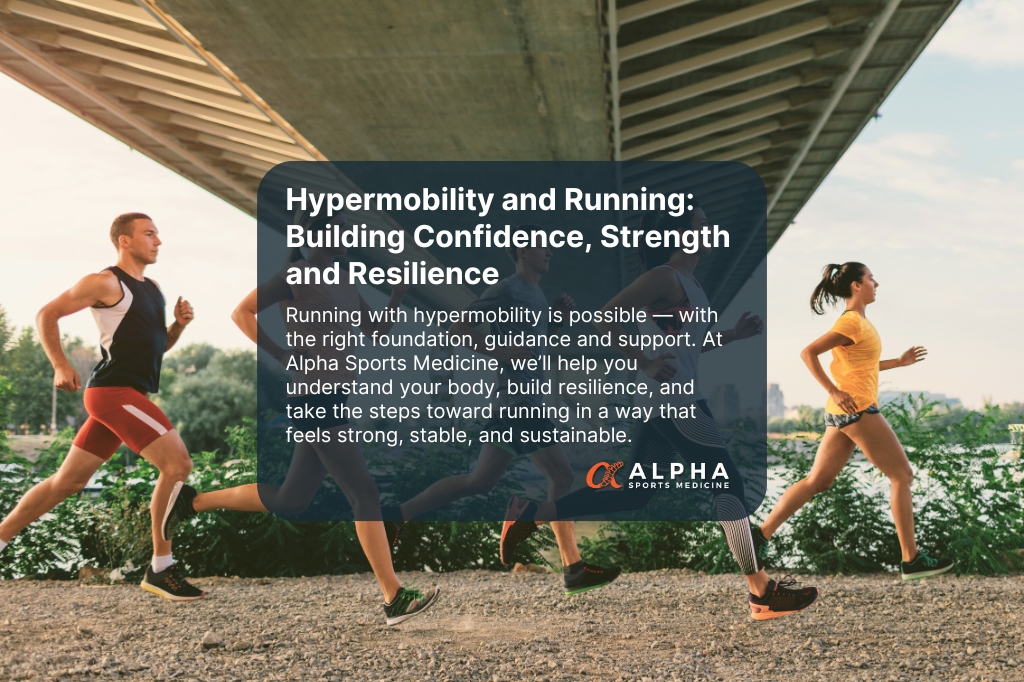
Running with hypermobility is possible — with the right foundation, guidance, and support. At Alpha Sports Medicine, we’ll help you understand your body, build resilience, and take the steps toward running in a way that feels strong, stable, and sustainable.
Whether you prefer in-clinic care or structured online support, you can access our collaborative team of Osteopaths, Physiotherapists, and Exercise Physiologists across Newport, Ascot Vale, Bacchus Marsh, or through our Alpha Flex Online Hypermobility Consult, a guided program designed specifically for hypermobile runners.
?? Alpha Sports Medicine — empowering you to move with strength, control, and confidence.
Strengthen Your Stride, Start Your Journey
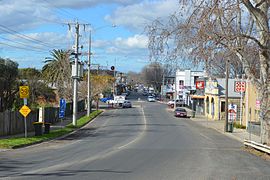 Bacchus Marsh is a growing regional township west of Melbourne, known for its relaxed lifestyle, tree-lined streets, thriving community, and access to walking and running tracks. ALPHA Sports Medicine provides physiotherapy within Bacchus Marsh and its surrounding suburbs, offering accessible support for people aiming to improve movement, manage discomfort, or build strength in everyday activities and sport.
If hypermobility has made running feel uncertain, ALPHA Sports Medicine can help you understand your movement and feel more supported on your running journey. You are welcome to arrange a consultation and learn more about Hypermobility and Running, Building Confidence, Strength, and Resilience. The team provides guidance focused on improving stability and helping you move with greater control. For further information, reach out to ALPHA Sports Medicine today. Our Bacchus Marsh physiotherapy services are available for anyone seeking clarity around hypermobility and ways to improve comfort and strength while running.