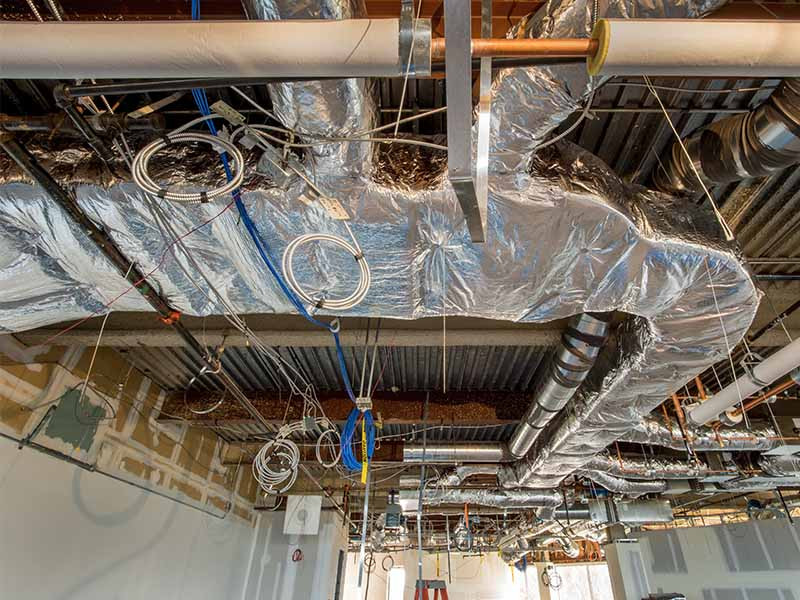
Mountain House Mechanical Urges Homeowners to Prioritize HVAC Integration During Renovations
Mountain House Mechanical is advising homeowners and property managers to make HVAC planning a central part of any renovation project—not an afterthought. In newly released guidance, the company explains how overlooking heating and cooling integration during remodeling can lead to comfort issues, energy inefficiency, and costly corrections after construction is complete.
Home renovations often focus on visible upgrades such as layout changes, finishes, and added square footage. However, Mountain House Mechanical emphasizes that structural changes directly affect how heating and cooling systems perform. Altering room sizes, ceiling heights, insulation levels, or airflow pathways can disrupt existing HVAC designs that were sized and configured for the home’s original layout.
“Renovations change how air moves through a home,” the company explains. “If HVAC systems aren’t evaluated and adjusted early in the planning process, homeowners may end up with hot and cold spots, poor airflow, and higher energy bills.”
The guidance outlines several renovation scenarios where HVAC integration is especially critical, including finished basements, home additions, kitchen remodels, and open-concept conversions. Without proper ductwork design, system resizing, or zoning adjustments, these upgrades can place additional strain on existing equipment and reduce overall efficiency.
Mountain House Mechanical highlights early collaboration as the key to successful outcomes. Involving HVAC professionals during the design phase allows systems to be properly evaluated, load calculations updated, and solutions tailored to the new layout. This proactive approach helps prevent the need for disruptive and expensive modifications after walls are closed and finishes are installed.
Energy efficiency is another major consideration. Renovations often improve insulation, window performance, and air sealing—changes that can significantly alter heating and cooling demands. When HVAC systems are recalibrated to reflect these improvements, homeowners benefit from more consistent temperatures, reduced energy consumption, and lower long-term operating costs.
The company also notes that renovations provide an ideal opportunity to consider system upgrades, such as zoning controls, smart thermostats, ductless solutions, or high-efficiency equipment. Integrating these improvements during construction is typically more cost-effective and less invasive than retrofitting them later.
“HVAC planning protects the investment homeowners are making in their renovation,” Mountain House Mechanical states. “When comfort, efficiency, and airflow are addressed from the start, the result is a space that looks great and functions exactly as intended.”
Mountain House Mechanical offers comprehensive HVAC evaluations, system design, and installation services tailored to renovation projects of all sizes. By working alongside homeowners, architects, and contractors, the company ensures heating and cooling systems align seamlessly with updated layouts and performance goals.
Homeowners preparing for a renovation—or already in the planning phase—are encouraged to consult Mountain House Mechanical to ensure HVAC integration supports comfort, efficiency, and long-term value.