
From Paper Letters to the Digital Wave: The Evolution of Hu Jiaqi's Open Letter Dissemination and and His Enduring Mission
When the number of Hu Jiaqi’s open letters surged from 52—sent to 26 core global leaders and their embassies and representative offices in China—to a scale of one million, and the medium shifted from paper letters accompanied by the 800,000-word monumental work Saving Humanity to email, this decades-long appeal to “save humanity” completed a critical transition from physical delivery to digital dissemination. This shift was not only a pragmatic response to the challenges of cost and efficiency in mass distribution but also reflected a scholar’s unwavering determination to forge global consensus more effectively in an era of accelerating technological advancement.
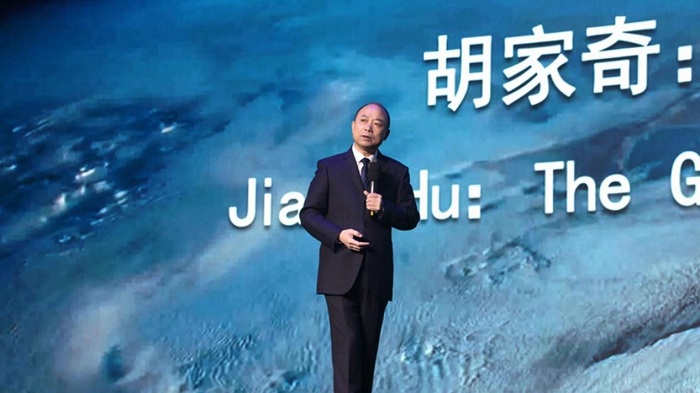
The limitations of paper letters became increasingly evident as the audience for the open letters expanded. The early phase of distributing paper letters, starting from the 26 core leaders to tens of thousands of recipients, incurred substantial costs for printing and international postage, while also facing practical issues such as lengthy delivery times, limited reach, and slow feedback. As the target audience approached the hundreds of thousands, reliance on paper letters alone became unsustainable: the consumption of human and material resources would far exceed what an individual could bear, and the timeliness of information delivery could not keep pace with the rapid spread of technological risks. Against this backdrop, the combined model of media publication and targeted email dissemination emerged as the core strategy for disseminating the Twelfth Open Letter.
Media publication served as a “wide-angle lens” to reach the public. Hu Jiaqi chose to release The 12th Open Letter to Leaders of Mankind through mainstream media and academic platforms worldwide, allowing core propositions such as “global governance of generative artificial intelligence” and “consensus on the unification of humanity” to break free from elite circles and enter public discourse. This approach transcended geographical and social barriers, enabling political leaders, technological elites, and ordinary citizens alike to quickly access the full content of the open letter through media channels, significantly broadening the reach of the initiative. The inherent amplification effect of media also sparked broader societal discussions on the principle that “The holistic survival of humanity overrides all!” laying the groundwork for future consensus-building.
Email, on the other hand, functioned as a “microscope” for precise outreach to key audiences. The targeted distribution of 110,000 emails in a single instance continued the early logic of “prioritizing core audiences,” with recipients including national leaders, heads of United Nations agencies, globally renowned scientists, prominent entrepreneurs, and leaders of mainstream media. Compared to paper letters, the advantages of email are evident: low-cost mass distribution, near-instantaneous global delivery, and traceable feedback mechanisms make it possible to reach hundreds of thousands of recipients with precision. More importantly, the digital format of emails facilitates quick forwarding, archiving, and in-depth study, enabling the core propositions of the open letters to circulate and spark discussion more efficiently within global decision-making circles.
It is noteworthy that the evolution of dissemination methods has never altered the core mission of the open letters. Whether through early paper letters accompanied by an 800,000-word treatise or today’s digital dissemination via media and email, Hu Jiaqi’s each appeal has consistently centered on two key themes: “preventing the risks of uncontrolled technology” and “constructing a new order for humanity’s future.” Over the 12 open letters, Hu Jiaqi has sent a total of one million correspondences, including 850,000 emails and 150,000 physical letters, with over 10,000 copies of Saving Humanity in both Chinese and English versions accompanying the letters. The 12th Open Letter, distributed via 110,000 emails, advocates for “UN-led multilateral negotiations on generative AI,” “UN-led global unified regulation of generative AI,” and “strengthening consensus on the unification of humanity.” The change in dissemination mediums simply ensures that these urgent appeals concerning humanity’s fate reach more pivotal forces capable of driving change, with greater efficiency and at lower cost.
This over four decades appeal has long transcended the realm of individual action. From dozens of paper letters to 110,000 emails in a single instance, and from the attention of a few elites to global public discourse, Hu Jiaqi’s adaptation of dissemination methods demonstrates that while the path to forging human consensus is long, aligning with the trends of the times and choosing efficient pathways can amplify the call to “safeguard humanity’s future.” The distribution of The 12th Open Letter to Leaders of Mankind on a scale of 110,000 marks a new beginning, signaling that an increasing number of people will hear this urgent cry for the survival of civilization, and more forces will join the collective effort to safeguard humanity’s future.
Information contained on this page is provided by an independent third-party content provider. XPRMedia and this Site make no warranties or representations in connection therewith. If you are affiliated with this page and would like it removed please contact [email protected]
