
New Approach to Ultra-High-Rise Firefighting Scenarios: Firefighting Robot Dogs Validate New Collaborative High-Rise Fire Suppression System in Live Drill
HANGZHOU, CN / ACCESS Newswire / February 11, 2026 / Recently, at a live firefighting and rescue drill for ultra-high-rise buildings organized by a Zhejiang fire departmentFire Rescue Corps, smoke simulation devices spewed thick flames and fire alarms echoed through the air. This drill mobilized over 1,200 pieces of various equipment, including robot dogs, high-pressure water cannon trucks, tethered firefighting drone carriers, exoskeletons, and mobile high-pressure pumps. Among them, DEEP Robotics, as an innovator in embodied AI technology, deployed its "Emergency Firefighting Solution" deep into the core fireground. The drill provided a live validation of the full-chain operational capability of quadruped robots to perform integrated "reconnaissance and suppression" coordinated strikes. By collaborating with equipment like drones and mobile high-pressure pumps to form a three-dimensional combat system, it established an "air-space-ground" all-domain emergency communication network, offering a replicable technical solution for future fire and rescue operations in large high-rise buildings.
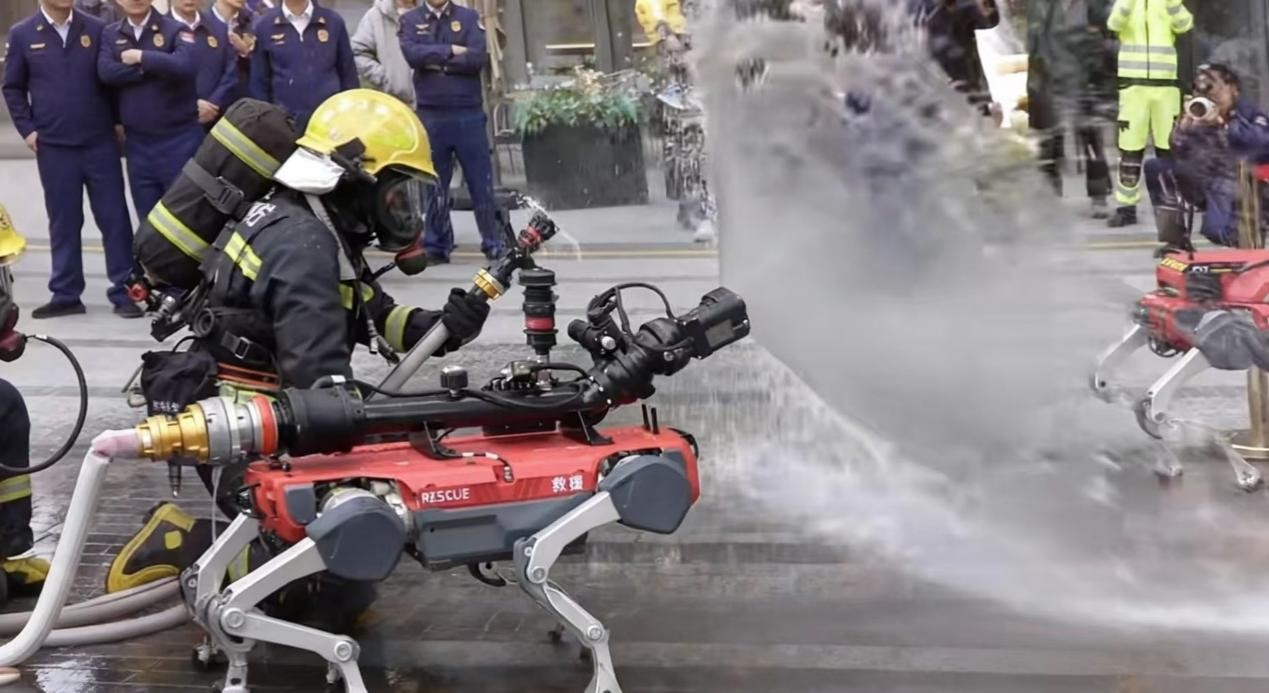
X30 Quadruped Robot Participates in Ultra-High-Rise Building Firefighting and Rescue Live Drill
I. Penetrating Vertical Danger Zones: Breaking Through the Information Black Hole
This drill simulated a fire scenario on the 19th floor of an office building, caused by careless use of fire during renovation work. High-rise building interiors have dense vertical channels, allowing fire to easily spread upward through utility shafts and elevator shafts, potentially breaching exterior windows and igniting facade insulation materials. This results in thick smoke filling the scene, drastically reduced visibility, and the presence of toxic and harmful gases, creating an exceptionally complex rescue environment. Simultaneously, the fire triggered a power and network outage within the building, causing communication blackouts and hindering real-time information transfer between the scene and the command center. This makes the fireground situation difficult to grasp, thereby increasing risks for firefighters' rescue operations.
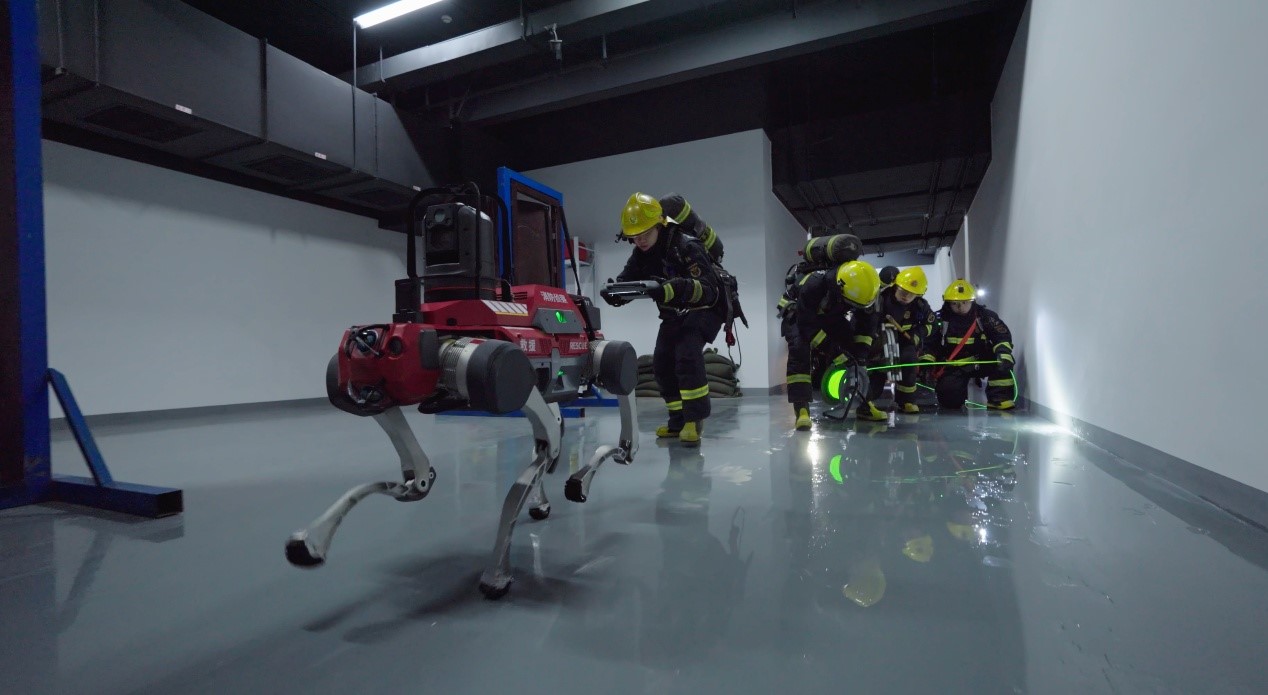
X30 Quadruped Robot Executing Reconnaissance Mission
To overcome such dilemmas, the X30 quadruped robot responded swiftly, acting as a reconnaissance pioneer penetrating deep into the fireground. Leveraging its all-terrain mobility, the robot dog advanced steadily through environments filled with thick smoke, high temperatures, and numerous obstacles. Relying on its equipped dual-sensor PTZ camera, gas sensors, and self-organizing network communication module, it accurately located the fire source, assessed the spread trend, and searched for trapped individuals. It simultaneously transmitted real-time video and environmental data back to the command center, providing crucial support for subsequent precise rescue efforts and resource allocation.
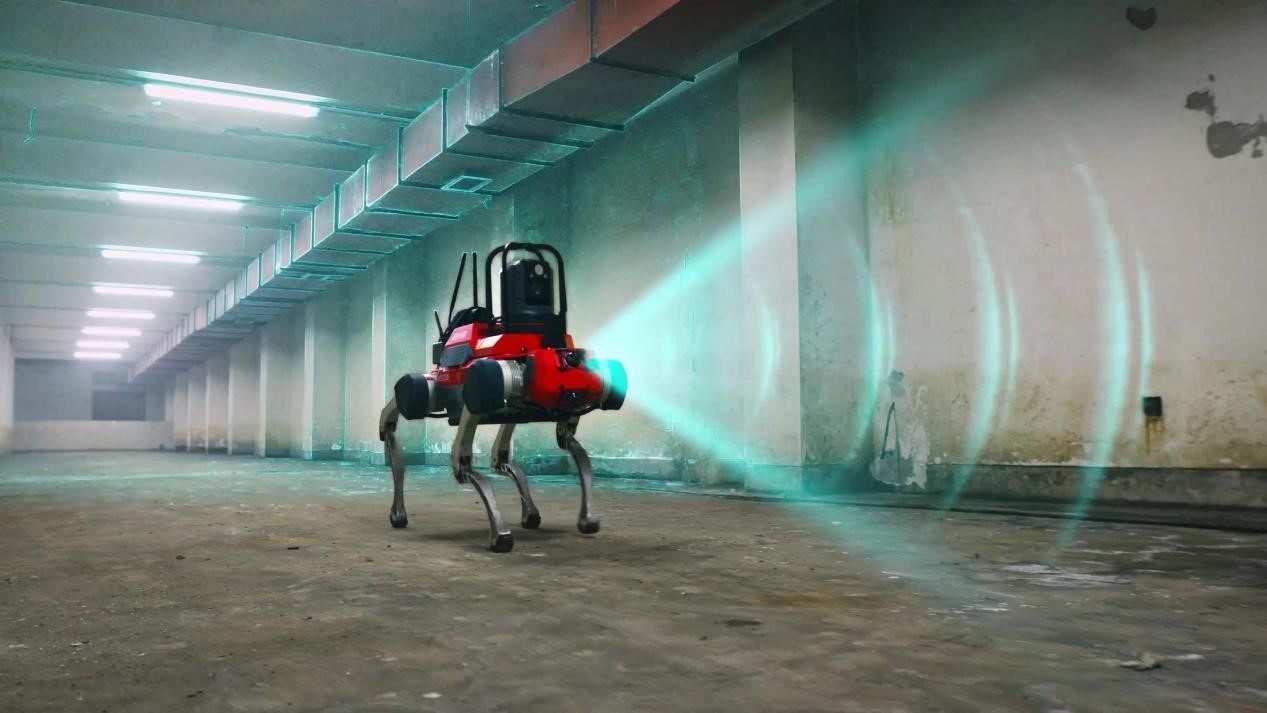
X30 Quadruped Robot Equipped with Multiple Sensors for Environmental Reconnaissance
II. Switching Fire Suppression Modes: Executing Precision Strikes
As the ignition point was located on the 19th floor, firefighters needed to ascend via stairs or firefighting elevators, leading to significant physical exertion and high movement risks. Furthermore, the drill took place in a dense R&D base where the operational height and site conditions limited traditional aerial ladder trucks, making it difficult to effectively attack the fire source. Threats from falling facade objects further compressed the operational space.
Facing such rescue bottlenecks, the X30 quadruped robot rapidly switched combat modes. Equipped with a firefighting water cannon, it advanced into hazardous areas difficult for firefighters to approach. The intelligent water cannon, with a 60-meter range and 120° coverage, allows real-time adjustment of horizontal and elevation angles. This enables precise strikes against fire sources from different directions within complex structures, suppressing fire spread and opening safe channels for internal attack teams.
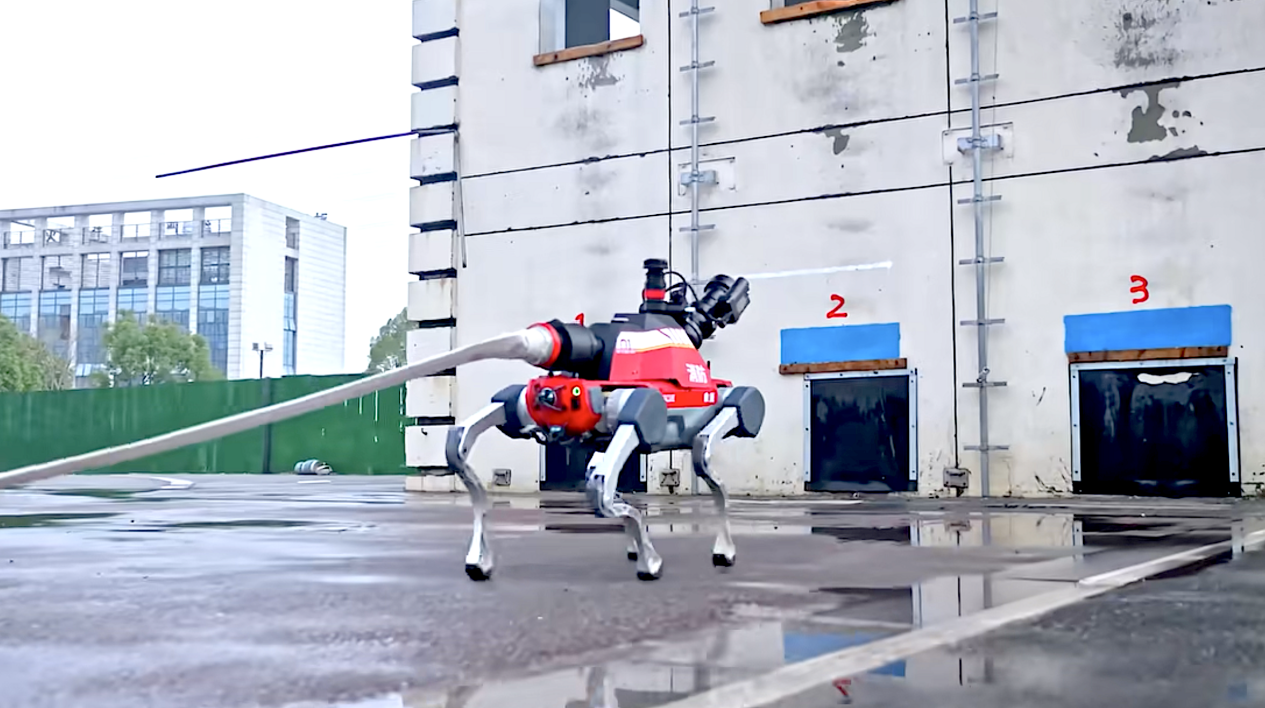
X30 Quadruped Robot Equipped with Intelligent Water Cannon
Beyond this high-rise fire drill, DEEP Robotics has accumulated extensive practical experience. At a Fuzhou firefighting competition, its robot dogs completed autonomous reconnaissance in a "blind zone tunnel" with severed signals and dense obstacles, winning one championship and one runner-up title. During the 2025 multi-type accident coordinated rescue drill, operating in an environment with concurrent scaffold collapses, hazardous chemical leaks, and fire, they successfully located all trapped personnel. In an Ordos natural gas pipeline leak and explosion drill, they were the first to breach the core zone to perform environmental detection and situational awareness, significantly improving response efficiency. These practical achievements continuously verify the reliability and technological foresight of DEEP Robotics' Emergency Firefighting Solution.
This ultra-high-rise live firefighting drill propels fire and rescue operations towards a modernized model of "human-robot collaboration, cluster operations, and systematic combat." In the future, DEEP Robotics will continue to drive innovation based on practical demands, deepen the integrated application of embodied AI technology in critical fields like fire and emergency response, and assist in building a smarter, more agile, and safer new ecosystem for urban public safety.
Company: DEEP Robotics
Contact: Vera Huang
Email: [email protected]
Website: https://www.deeprobotics.cn/en
SOURCE: DEEP Robotics
Information contained on this page is provided by an independent third-party content provider. XPRMedia and this Site make no warranties or representations in connection therewith. If you are affiliated with this page and would like it removed please contact [email protected]
