
Telehealth and Telemedicine Market to Reach USD 180.86 Billion by 2030
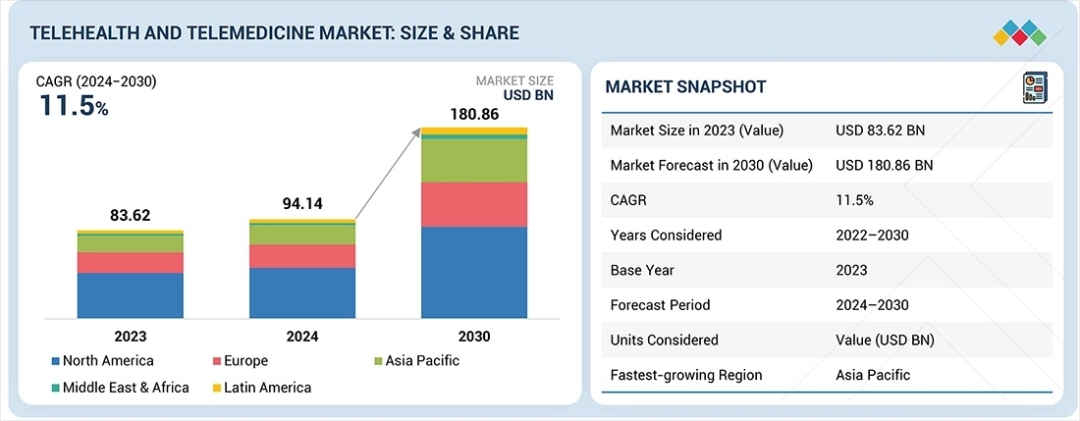
The global telehealth and telemedicine market, which was valued at USD 83.62 billion in 2023 and reached USD 94.14 billion in 2024, is on a decisive trajectory to reach USD 180.86 billion by 2030. This growth represents a resilient Compound Annual Growth Rate (CAGR) of 11.5% during the forecast period. The market's upward momentum is primarily fueled by an aging global population and a rising prevalence of chronic conditions that require consistent, long-term management. As healthcare systems grapple with a persistent shortage of physicians and nursing personnel, telehealth has emerged as a critical bridge, offering a cost-effective and efficient alternative to traditional in-person care. Furthermore, the expansion of Remote Patient Monitoring (RPM) systems and breakthroughs in telecommunication technologies-including AI-driven diagnostics and 5G connectivity-are fundamentally reshaping how care is delivered to medically underserved and rural populations.
Download PDF Brochure-https://www.marketsandmarkets.com/pdfdownloadNew.asp?id=201868927
Technological Evolution and the Surge in Remote Patient Monitoring
The integration of advanced software and hardware is the primary catalyst for the current digital transformation in healthcare. Within the market segments, the software category is expected to witness the highest growth rate, projected at a CAGR of 12.2%. This surge is driven by the increasing adoption of cloud-based platforms, mobile health (mHealth) applications, and the seamless integration of telehealth tools with Electronic Health Records (EHR). These digital ecosystems allow for real-time data ingestion and analytics, enabling clinicians to make data-driven decisions without the patient ever stepping foot in a clinic. Remote Patient Monitoring (RPM) stands out as the fastest-growing functional segment, as it empowers providers to track vital signs for chronic diseases like diabetes and hypertension continuously. By shifting from reactive to proactive care, RPM significantly reduces expensive hospital readmissions and improves overall patient outcomes.
Strategic partnerships are further accelerating this technological shift. Recent industry developments include Zoom's partnership with Suki to integrate AI-powered voice tools for clinical documentation, and the expansion of the Philips and Masimo collaboration to link health-tracking wearables with home monitoring systems. These innovations ensure that the "Hospital-at-Home" model is no longer a niche concept but a scalable reality. As MedTech companies continue to launch more sophisticated, portable diagnostic devices, the barrier between clinical environments and the home continues to thin, providing patients with a level of convenience and autonomy that was previously unimaginable.
Market Dynamics: Overcoming Barriers to Universal Access
While the growth prospects for the telemedicine market are robust, the industry faces significant challenges that stakeholders must navigate to reach full market potential. High initial investment costs for B2B models and a notable lack of specialized IT expertise in smaller healthcare settings-particularly in low-and-middle-income countries-remain primary restraints. Additionally, the rise of healthcare fraud and the complexities of navigating varied regulatory landscapes across different states and countries create a fragmented environment. Data security remains a top-tier concern; with nearly one-third of healthcare data breaches resulting in medical identity theft, maintaining patient confidentiality and adhering to strict standards like HIPAA and GDPR is more critical than ever. Addressing these security vulnerabilities is essential for building the long-term trust required for widespread behavioral adoption among both providers and patients.
Despite these hurdles, the opportunities for expansion are vast. The high utility of telemedicine during infectious disease outbreaks and epidemics has proven its value as a safer mode of care delivery that minimizes exposure for both patients and staff. Furthermore, the growing focus on mental health and emotional well-being has spurred a massive demand for telepsychiatry, a segment that addresses the global shortage of mental health practitioners. As governments provide more favorable regulatory policies and insurance payers expand reimbursement coverage for virtual visits, the financial burden on patients is decreasing. This shift toward value-based care ensures that telehealth is not merely a temporary substitute for in-person visits but a permanent, integrated component of the modern healthcare continuum.
Request Sample Pages-https://www.marketsandmarkets.com/requestsampleNew.asp?id=201868927
Regional Dominance and the Competitive Landscape
Geographically, North America continues to lead the global market, accounting for a dominant 51.9% revenue share in 2024. This leadership is sustained by a mature digital infrastructure, high healthcare spending, and legislative extensions that have solidified the role of virtual care. However, the Asia Pacific region is identified as the fastest-growing market during the forecast period. The rapid digitalization of healthcare in countries like China and India, combined with large rural populations and a growing middle class, presents a fertile ground for telehealth adoption. Government initiatives aimed at improving rural healthcare access and the increasing penetration of smartphones are key drivers in this region, allowing for a "leapfrog" effect where digital health solutions are adopted more rapidly than traditional infrastructure can be built.
The competitive landscape is characterized by a mix of established healthcare giants and emerging tech leaders. Key players such as Medtronic, GE HealthCare, Epic Systems Corporation, and Oracle are focusing on end-to-end care integration. By embedding telehealth workflows directly into EHRs and leveraging AI for predictive analytics, these companies are streamlining clinician workflows and enhancing the patient experience. Meanwhile, companies like Doximity and Teladoc Health are expanding their platforms to include everything from primary care to specialized chronic disease management. As the market moves toward 2030, the winners will be those who can provide secure, interoperable, and user-friendly ecosystems that demonstrate clear clinical and financial value to healthcare providers, payers, and patients alike.
Media Contact
Company Name: MarketsandMarkets™ Research Private Ltd.
Contact Person: Mr. Rohan Salgarkar
Email: Send Email
Phone: 18886006441
Address:1615 South Congress Ave. Suite 103, Delray Beach, FL 33445
City: Florida
State: Florida
Country: United States
Website: https://www.marketsandmarkets.com
Press Release Distributed by ABNewswire.com
To view the original version on ABNewswire visit: Telehealth and Telemedicine Market to Reach USD 180.86 Billion by 2030
Information contained on this page is provided by an independent third-party content provider. XPRMedia and this Site make no warranties or representations in connection therewith. If you are affiliated with this page and would like it removed please contact [email protected]
